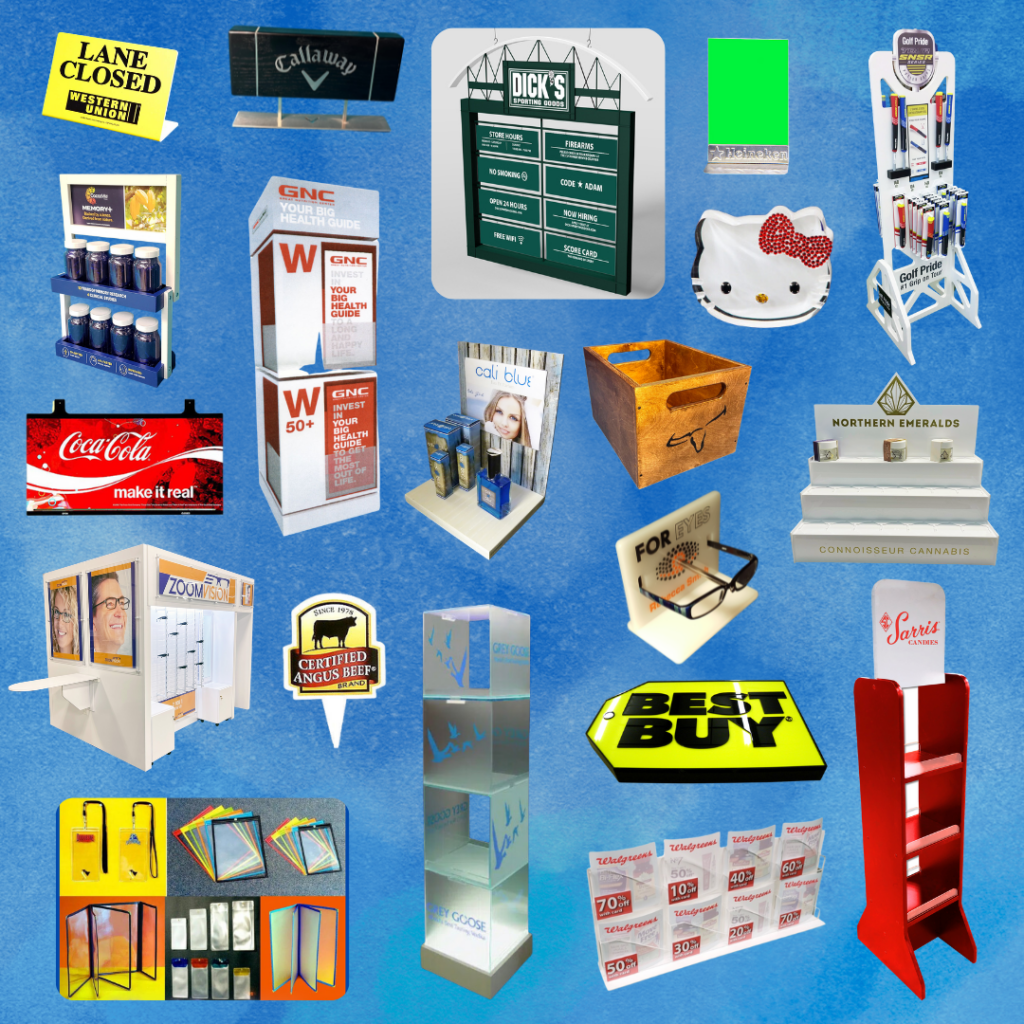
Walk into any successful retail store and you’ll notice something immediately: the products that sell best are rarely sitting on a shelf by accident.
They’re highlighted.
They’re featured.
They’re impossible to miss.
That’s the power of a well-designed retail display.
In today’s competitive retail environment, custom retail displays, store fixtures, and point-of-purchase merchandising solutions play a critical role in attracting shoppers, increasing engagement, and driving sales.
Whether you’re launching a new product, refreshing a retail environment, or rolling out fixtures to hundreds of locations nationwide, understanding today’s retail display landscape is essential.
This guide covers everything retailers, brands, and marketers need to know about retail displays in 2026.
What Is a Retail Display?
A retail display is any fixture, structure, sign, or merchandising element designed to showcase products within a retail environment.
Retail displays help brands:
- Increase product visibility
- Influence purchasing decisions
- Communicate product benefits
- Create memorable shopping experiences
- Drive impulse purchases
Retail displays can be temporary promotional pieces or permanent fixtures integrated into a store’s layout.
Why Retail Displays Matter More Than Ever
Consumers are exposed to thousands of marketing messages every day.
By the time they enter a store, their attention is already divided.
An effective retail display cuts through that noise.
Studies consistently show that strong visual merchandising can:
- Increase product awareness
- Improve customer engagement
- Encourage impulse purchases
- Increase average transaction value
- Strengthen brand perception
In 2026, retailers are also competing with e-commerce, making the in-store experience more important than ever.
A thoughtfully designed display helps create an experience that online shopping simply cannot replicate.
Types of Retail Displays
Point-of-Purchase (POP) Displays
Point-of-purchase displays are strategically positioned near checkout areas or high-traffic zones to encourage impulse purchases.
Common examples include:
- Gift card displays
- Countertop displays
- Snack and beverage displays
- Promotional product showcases
POP displays are often used for product launches, seasonal promotions, and limited-time offers.
Endcap Displays
Endcaps are displays positioned at the end of retail aisles.
These highly visible locations often generate significantly more product interaction than standard shelving.
Endcap displays are ideal for:
- New product introductions
- Seasonal promotions
- Featured brands
- Cross-merchandising opportunities
Floor Displays
Floor displays are freestanding merchandising units positioned throughout a store.
They provide flexibility and can be placed wherever traffic is highest.
Benefits include:
- Large branding opportunities
- Increased product capacity
- Easy relocation
- Strong visual impact
Countertop Displays
Countertop displays are compact fixtures designed for checkout counters and service areas.
Popular applications include:
- Cosmetics
- Electronics accessories
- Gift cards
- Food and beverage items
Store Fixtures
Store fixtures are permanent or semi-permanent structures that form the backbone of a retail environment.
Examples include:
- Shelving systems
- Gondolas
- Product bays
- Display cabinets
- Branded merchandising units
Store fixtures help create consistency throughout a retail space while supporting long-term merchandising strategies.
Choosing the Right Display Material
Selecting the proper material is one of the most important decisions in retail display design.
Acrylic Displays
Acrylic remains one of the most popular display materials because it offers:
- Crystal-clear appearance
- Excellent durability
- Premium presentation
- Versatile fabrication options
Acrylic displays are frequently used for:
- Cosmetic displays
- Electronics displays
- Luxury retail environments
- Sign holders
- Product risers
PETG Displays
PETG provides:
- Excellent impact resistance
- High clarity
- Greater flexibility than acrylic
- Cost-effective production
PETG is often selected for high-volume retail programs and environments where durability is critical.
Wood Fixtures
Wood fixtures create warmth and authenticity.
Many brands use wood to communicate:
- Sustainability
- Craftsmanship
- Premium positioning
- Natural aesthetics
Wood is commonly found in:
- Sporting goods stores
- Specialty retail
- Candy stores
- Grocery environments
- Lifestyle brands
Metal Components
Metal provides strength and structural support while adding a modern appearance.
Metal is frequently incorporated into:
- Floor displays
- Gondola systems
- Store fixtures
- Heavy-duty merchandising solutions
The Retail Display Design Process
Successful retail displays don’t happen by accident.
Most programs follow a structured process:
1. Discovery
Understanding:
- Target audience
- Product goals
- Retail environment
- Budget requirements
2. Concept Development
Creating:
- Sketches
- Renderings
- Initial design concepts
3. Engineering
Transforming concepts into manufacturable solutions.
4. Prototyping
Building physical samples for testing and refinement.
5. Production
Manufacturing components at scale.
6. Distribution
Shipping displays to stores nationwide.
7. Installation
Ensuring displays are properly assembled and merchandised.
What Makes a Great Retail Display?
The most successful displays share several characteristics.
Visibility
Can shoppers quickly notice the display?
Simplicity
Can customers understand the message in seconds?
Brand Consistency
Does the display align with the overall brand experience?
Durability
Will the display withstand daily retail traffic?
Ease of Assembly
Can store associates easily set it up?
Cost Efficiency
Does the display achieve goals while staying within budget?
Retail Display Trends for 2026
Sustainability
Brands continue seeking recyclable materials, reusable fixtures, and environmentally responsible manufacturing.
Modular Design
Modular displays allow retailers to adapt quickly to changing promotions and product assortments.
Hybrid Materials
Combining acrylic, wood, metal, and print elements creates unique visual experiences.
Experiential Retail
Displays increasingly focus on interaction and customer engagement.
Smaller Store Formats
As retailers optimize footprints, displays must work harder within limited space.
How to Choose a Retail Display Manufacturer
When selecting a display partner, consider:
Experience
How many years have they been serving the retail industry?
Design Capabilities
Can they assist with concept development and engineering?
Manufacturing Capacity
Can they handle large-scale rollouts?
Material Expertise
Do they work with acrylic, PETG, wood, metal, print, and other materials?
Logistics Support
Can they ship efficiently to stores nationwide?
Customer Service
Will you have a dedicated team throughout the project?
Why Brands Choose BAW Plastics
For more than four decades, BAW Plastics has partnered with retailers, brands, and agencies to create custom retail displays, store fixtures, sign holders, POP displays, and merchandising solutions.
From concept development and prototyping to manufacturing, printing, assembly, and nationwide distribution, our team helps bring ideas to life.
Our capabilities include:
- Acrylic fabrication
- Custom wood fixtures
- Digital printing
- Screen printing
- CNC routing
- Thermoforming
- Sewing and vinyl products
- Prototyping
- Warehousing
- Nationwide fulfillment
Whether you’re launching a single display or rolling out thousands of fixtures across multiple locations, we’re here to help.
Ready to Bring Your Retail Display Idea to Life?
Every successful retail display starts with an idea.
Whether you need a custom POP display, acrylic sign holder, wood fixture, endcap program, or complete retail environment, partnering with the right manufacturer can make all the difference.
Contact BAW Plastics today to discuss your next retail display project.
Learn more at our blog: https://www.bawplastics.com/blog/